
**No data, no AI. Random data, random results. **This principle defines the reality of modern marketing and is fundamental for digital transformation for AI readiness in Marketing.
Many organizations fail with AI and algorithms because their marketing data is fragmented, unstructured, or scattered across different tools. The result: random outcomes, weak insights, and wasted budgets. True digital transformation doesn’t mean the next quick-fix tool. It requires building and maintaining a structured marketing data foundation that reliably feeds algorithms, machine learning (ML), and AI over the long term.
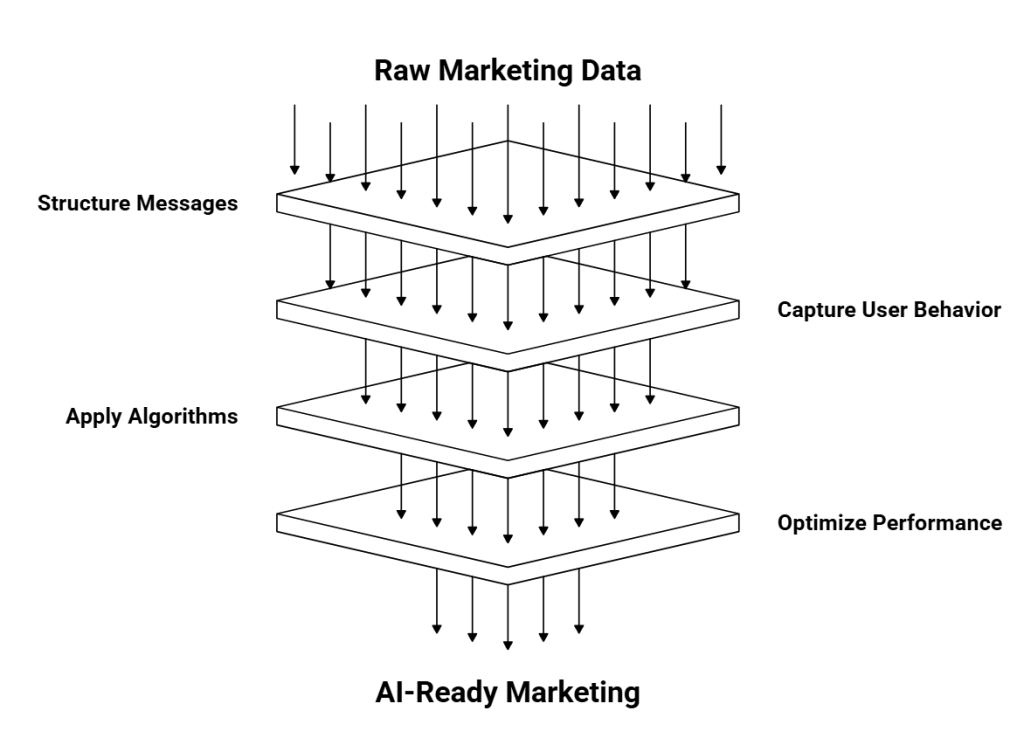
Understanding Marketing from a Data Perspective
To make AI truly useful, marketing must think in data structures – not just in tools, channels, or campaigns. Every company already owns extensive marketing information: websites, landing pages, newsletters, blog posts, ads, case studies, press releases, and campaign results. The challenge isn’t a lack of content, but the absence of structured, connected, and enriched data. When you treat marketing messages as structured data, they become part of a living database that enables algorithms to learn continuously and improve performance.
Marketing Messages as Data and Fixed Data Patterns:
Every marketing message – headline, visual, caption, creative, call-to-action – follows a specific pattern. These fixed data patterns are repeatable combinations of elements that you can measure and compare. When you systematically collect and categorize these messages with metadata (topic, audience, funnel stage, objective, format, tone), they become part of a structured data pattern.
Users as Data and Dynamic Data Patterns:
While you can structure and store marketing messages, user data remains dynamic. People change their behavior every second: searches, clicks, likes, time on page, purchases, or location signals all form a constantly evolving dynamic data pattern.
Algorithms, ML, and AI by Platforms like Meta (Facebook and Instagram):
Algorithms, machine learning models, and AI – especially on platforms like Meta, TikTok, or Google – connect these two data streams: the fixed patterns of messages and the dynamic patterns of users. Their performance depends entirely on input data quality. Fragmented or inconsistent marketing data prevents algorithms from identifying correlations or optimizing effectively. Structured, labeled, and consistent message data enables faster learning and automatically more relevant results.

The Problems You’re Trying to Solve
Modern marketing teams face recurring challenges:
-
Content Overload** **The constant demand for new content for every channel creates a never-ending production cycle. This drains resources and barely scales.
-
Wasted Efforts** **Teams often use high-value assets like blog posts, whitepapers, and case studies only once. They then disappear into digital archives. Their full potential remains untapped.
-
Ineffective AI** **AI is only as good as the data it works with. Unstructured or low-quality content leads to poor recommendations and prevents meaningful optimization.
-
Fragmented Strategy** **Too often, teams separate content creation, management, and distribution. This lack of integration creates silos and inefficiencies that weaken overall impact.
Our Solution: A Strategic Framework
Our approach for digital transformation for AI readiness in Marketing is based on Owned Asset Optimization (OAO): the systematic transformation of existing digital assets into structured, scalable, AI-ready marketing data.
At the core lies the principle of Atomized Content: We decompose large assets into smaller, reusable components – text snippets, visuals, message variants, and more. We enrich each component with metadata such as audience, funnel position, and objective.
This process creates the foundation for predictive and automated marketing. AI and algorithms continuously learn from your structured content base and optimize distribution across channels.
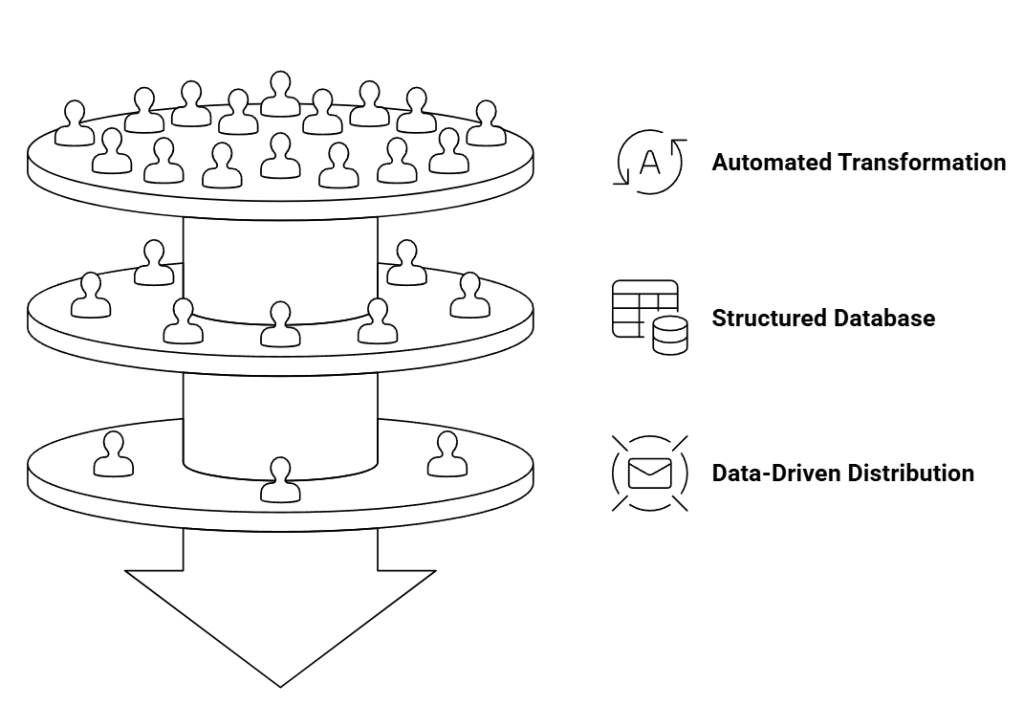
How We Help You Succeed
1. Automated Content Transformation** **With AI and scraper technology, we transform existing content into a comprehensive library of marketing messages. This process replaces manual repurposing and enables scaling without quality loss.
**2. Building a Structured Database **Every AI-driven marketing strategy needs a structured content data model. Verze.ai (formerly Content Catalog) is the world’s first marketing message database (RAG). It ensures your assets are enriched, versioned, and AI-ready – giving algorithms the structure they need for performance.
3. Enabling Data-Driven Distribution** **Atomized, structured content enables predictive push marketing. Through microtargeting, messages reach the right audience at the right moment with maximum relevance. This creates a continuous cycle where you don’t just produce content, but systematically recycle, optimize, and scale it.
Getting Started
The first step toward your digital transformation for AI readiness in Marketing is simple: Organize your data. Stop focusing solely on producing more content. Instead, unlock the hidden value of what you already have.
Want to learn how to transform your digital marketing foundation? Reach out for a personalized consultation.
Sources
-
Erni, P. (2025). Atomized Content, https://verze.ai/blog/atomized-content/
-
Licata, B. (2024). Owned Asset Optimization: The Key to AI-Ready Content, https://martech.org/owned-asset-optimization-the-key-to-connecting-with-financial-consumers/
-
Gartner. (2023). CMO Spend and Strategy Survey 2023–2024, https://www.gartner.com/en/newsroom/press-releases/2023-05-22-gartner-survey-reveals-71-percent-of-cmos-believe-they-lack-sufficient-budget-to-fully-execute-their-strategy-in-2023
-
McKinsey & Company. (2022). The Data-Driven Enterprise of 2025, https://www.mckinsey.com/capabilities/mckinsey-digital/our-insights/the-data-driven-enterprise-of-2025
-
Harvard Business Review. (2018). Why Companies That Wait to Adopt AI May Never Catch Up, https://hbr.org/2018/12/why-companies-that-wait-to-adopt-ai-may-never-catch-up