Five predictions for 2026 and beyond: what will change, why it changes, and what it means for the people who have to run marketing through it.
By January 2026, marketers had started to wake up from the generative chat, video and imagery absorption winter. The more pressing technological shift was not only that machines could generate assets. It was the workflow revolution: define a goal, let agents chase it, and decide whether humans stay in the loop or, in some cases, are outlooped entirely.
The original assumption behind generative AI was that marketers would stay in control, use the tools to make daily work easier, and deliver more efficiently. That is partly true. But the real use case that emerged in parallel is larger: agents take responsibility for tasks. They force humans to rethink workflows because they change who does the work, where discovery happens, and which parts of the marketing funnel a machine handles on its own.
At VERZE, we believe marketing teams still underestimate the operational impact of agents. These are the five predictions we are certain will develop.
What’s Ahead
- Why 2026 disrupts the pattern of the last decade
- Prediction one: brands will use agents to run the one-to-one
- Prediction two: influencer budgets move toward authenticity
- Prediction three: marketing organizations become composable
- Prediction four: ambient devices become a major brand channel
- Prediction five: GenAI shopping tools stay under a tenth of revenue
- What this asks of a CMO
- The ten-year view: smarter systems, pickier people
Why 2026 Disrupts the Pattern of the Last Decade
Social, mobile and programmatic each added a place and a possibility for brands to be seen. Generative AI adds an extra layer, but it is different at the core: it changes who performs the work.
The common white-collar transactional tasks that used to fill a team’s week, such as versioning, sequencing, and matching a message to a moment, are being absorbed by intelligence that can decide for itself.
The result is simple but consequential: the marketer’s day moves from producing and scheduling toward directing, supervising, and deciding what good looks like. Developers and coders, the earliest adopters of the new technology, have already experienced the same shift.
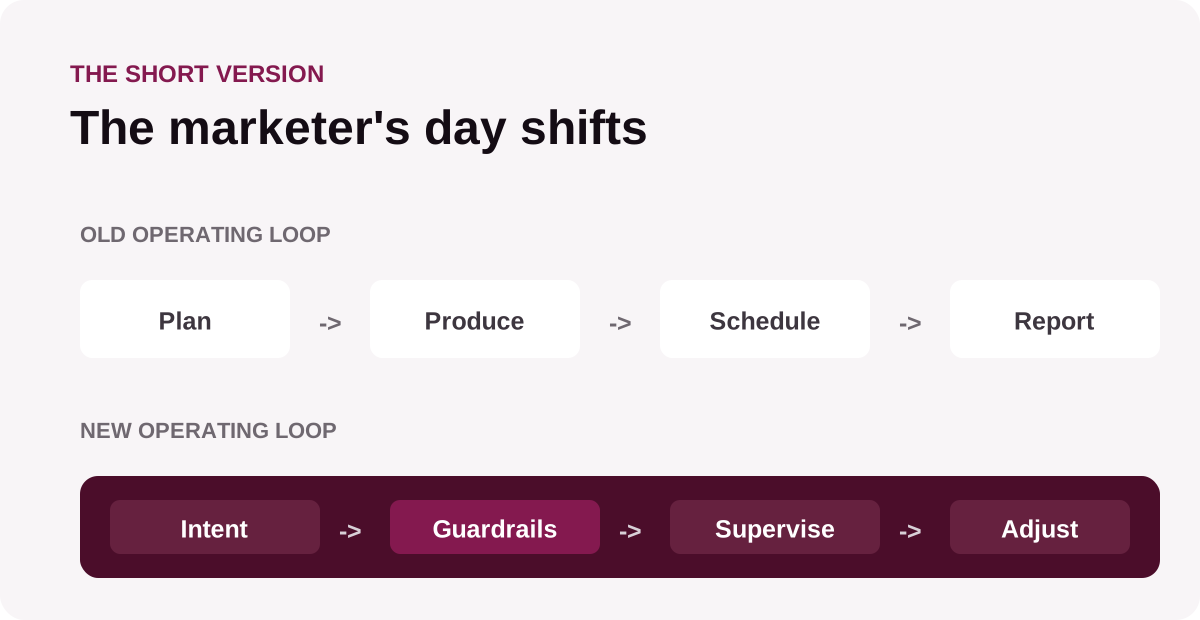
Most of the week used to go into making things and moving them between people. Output was the measure of a good quarter. In the next version of marketing work, the scarce skill stops being the making and starts being the deciding: setting intent, setting guardrails, supervising the loop, judging the result, and adjusting the system.
Prediction One: Brands Will Use Agents to Run the One-to-One
AI agents will absorb routine engagement, analysis, reminders, reorders, service answers, guidance, and the work of turning channel campaigns into fluid, autonomous journeys.
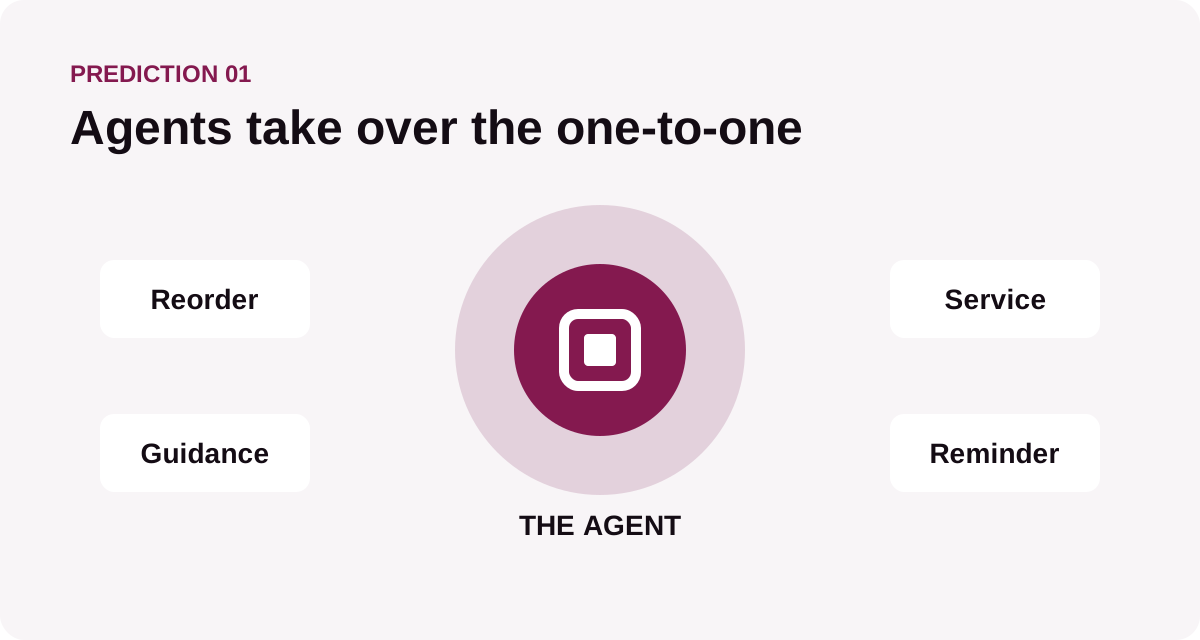
This is the kind of exchange a team used to build a campaign for. Now it can happen one person at a time.
What actually changes:
-
Channel plans lose their grip. Engagement is triggered by what a person does, not by the date a campaign was scheduled to run.
-
Traditional martech architecture collapses. Stacks assembled around channels and campaign calendars have less to do when journeys assemble themselves.
-
Marketers supervise systems, not campaigns. The role moves to setting objectives and boundaries, then reviewing what the system chose and why.
This is already visible in familiar behaviors: airlines rebooking before someone notices the delay, retailers prompting a reorder at the moment a product runs out, and ad algorithms choosing which creative to distribute.
Prediction Two: Influencer Budgets Move Toward Authenticity
As synthetic media becomes trivial to produce and social results feed AI answers, brands will pay for verified identity rather than raw engagement.
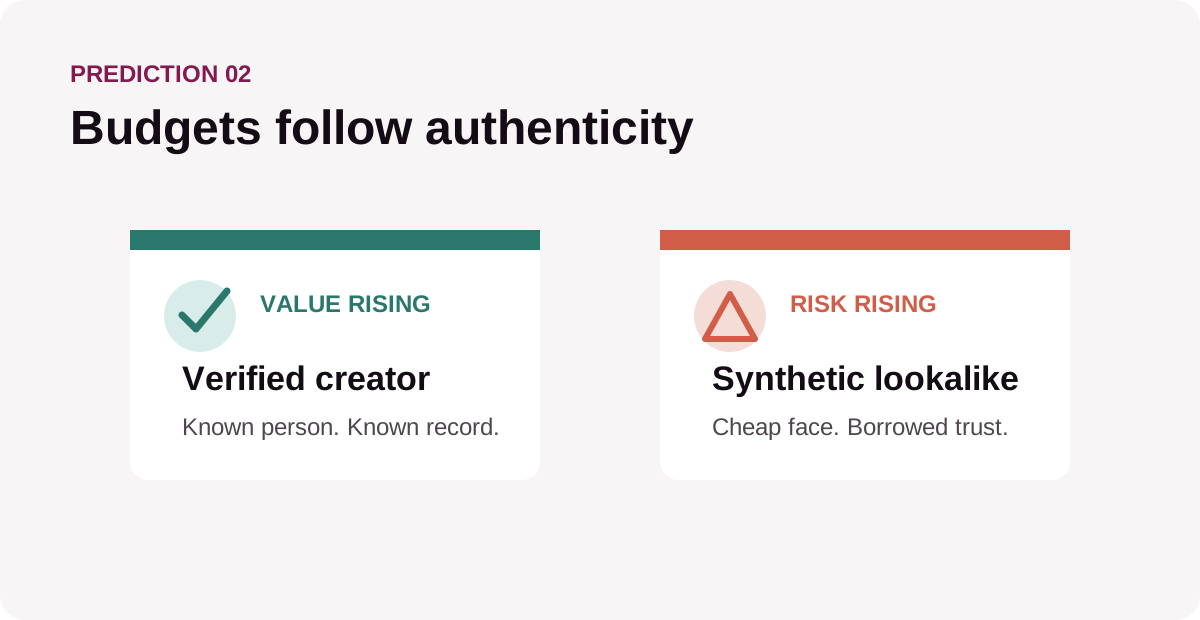
The buying question changes from “how big is the audience?” to “are we certain who this is?”
What actually changes:
-
Identity verification becomes standard practice. Expect creator contracts and platform tooling to carry proof of who made the content, in the same way rights clearance works today.
-
Social answers feed the AI answer. Assistants increasingly summarize posts and reviews, so misinformation about a brand travels further and faster than a correction.
-
Deepfake risk becomes a brand risk. A convincing fake founder or spokesperson is now cheap to make. Response planning moves from a PR nice-to-have to a necessary capability.
Prediction Three: Marketing Organizations Become Composable
As AI absorbs execution, teams flatten and regroup around modular structures, hybrid human-AI roles, and more autonomous individual contributors.
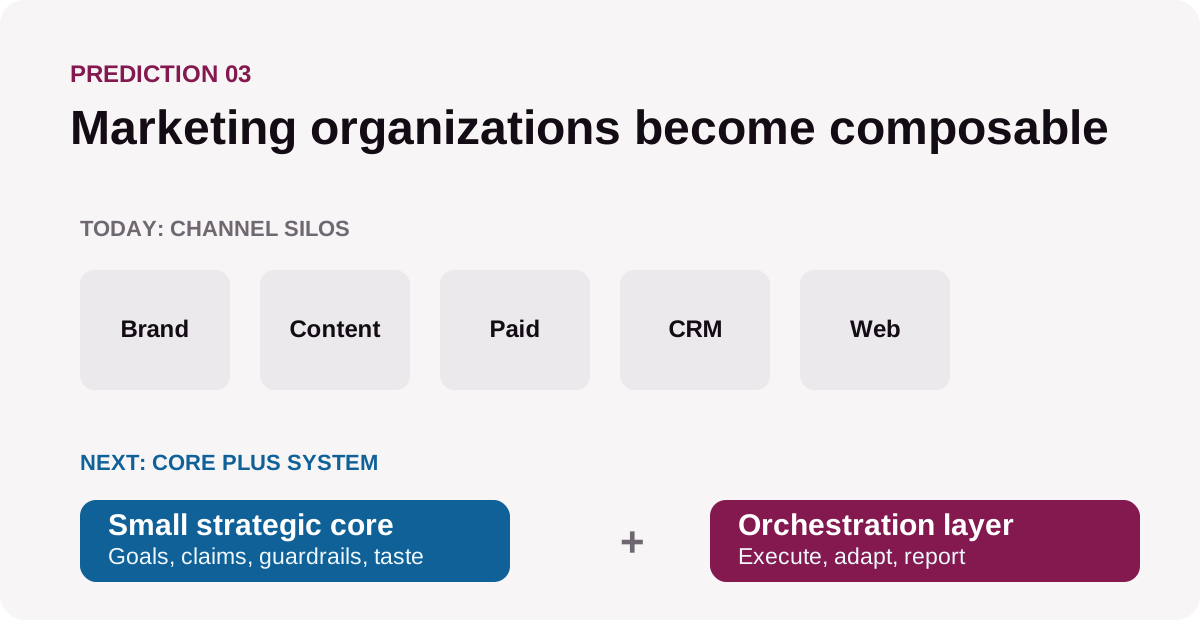
The old channel-silo model created handoffs between every column. The brief travelled and the meaning drifted. The next model is a small strategic core plus an orchestration layer: people set goals, claims, guardrails and taste, while systems execute, adapt and report across channels.
What actually changes:
-
Team boundaries blur. Work regroups around outcomes rather than channels, and people move between problems instead of owning a lane.
-
Hybrid human-AI roles emerge. Roles are defined by what a person directs a system to do, and job descriptions start naming the systems they work alongside.
-
Digital dexterity becomes the new hiring filter. Strategic thinking, cross-functional problem solving, and comfort with new tools outrank narrow channel expertise.
Prediction Four: Ambient Devices Become a Major Brand Channel
AI-enabled wearables, sensors and connected devices will shift engagement from deliberate searches to contextual, passive moments of discovery.
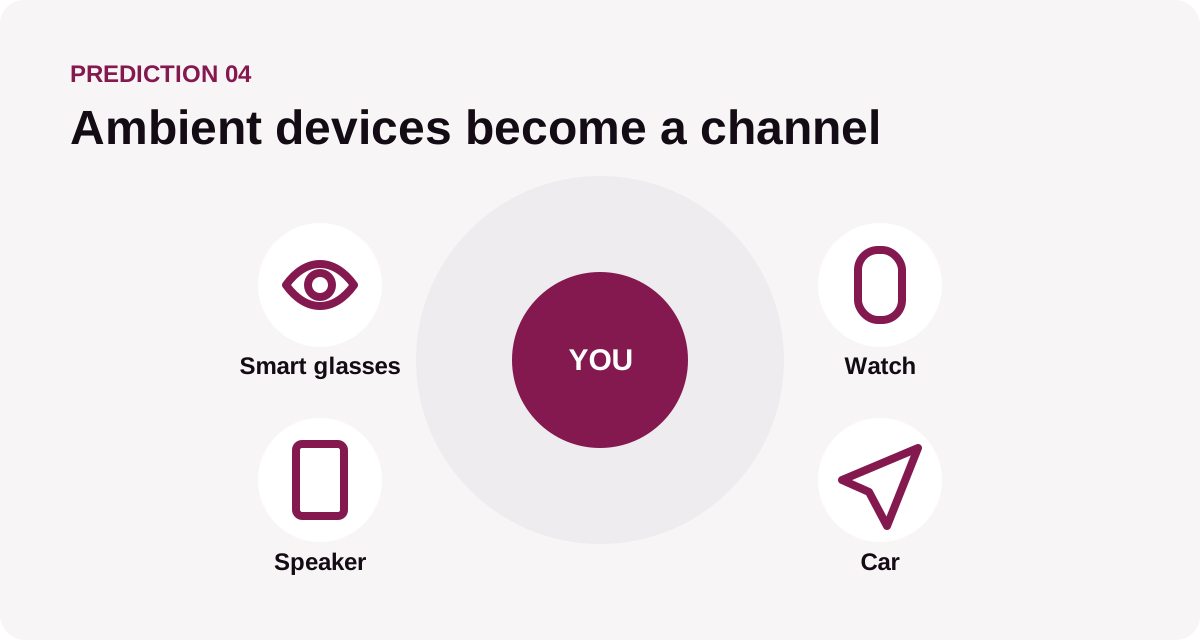
Ray-Ban Meta glasses, CarPlay, a watch nudge on a run, and home speakers all create contexts where a brand can be useful before anyone searches.
What actually changes:
-
Discovery stops being deliberate. Suggestions arrive because of where someone is and what they are doing, not because they opened an app and typed.
-
Voice and vision become the interface. A brand moment may be one spoken sentence or a glance-sized card, with no layout, no banner, and no scroll.
-
Privacy and consent get harder. Continuous sensing sharpens questions about tracking and permission, and mishandling them will cost much more than a missed impression.
Prediction Five: GenAI Shopping Tools Stay Under a Tenth of Revenue
Despite the hype, consumer shopping agents will contribute a small share of e-commerce revenue. They are held back mainly by trust, not by capability.
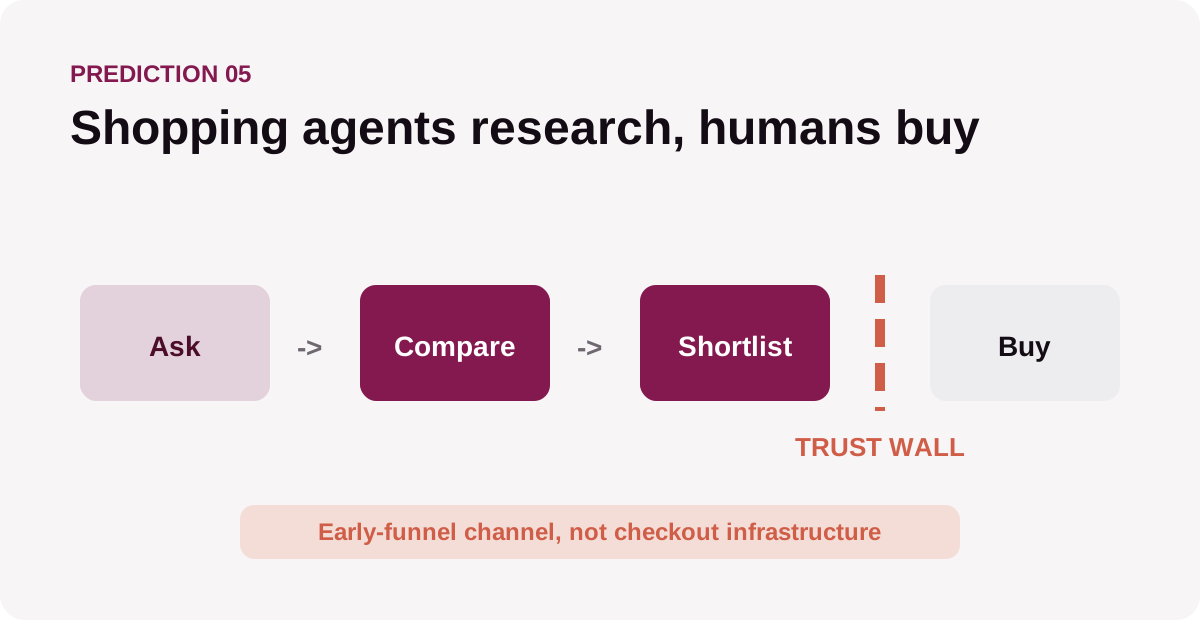
Even AI-enthusiastic shoppers hesitate to hand over the purchase. The suspicion is simple and reasonable: whose interests is the agent serving when it recommends? How is the agent influenced? So the tools land in research and discovery, not checkout.
Plan for shopping agents as an early-funnel channel this year, not as a new checkout to integrate.
What actually changes:
-
Adoption lags capability. The technology is ready, but trust has a long way to go before commercial adoption. Expect a much slower ramp than vendor roadmaps assume.
-
Fear of biased recommendations is the blocker. Shoppers suspect the agent may be paid to prefer someone. Neutrality or visible reasoning is probably what will unlock more use.
-
Value shows up upstream. Measure these tools on research and consideration, not transactions, or you may write off something too soon that is already working.
What This Asks of a CMO
Across all five predictions, the same three jobs keep surfacing. The common thread is how marketing is set up to operate in the near future.
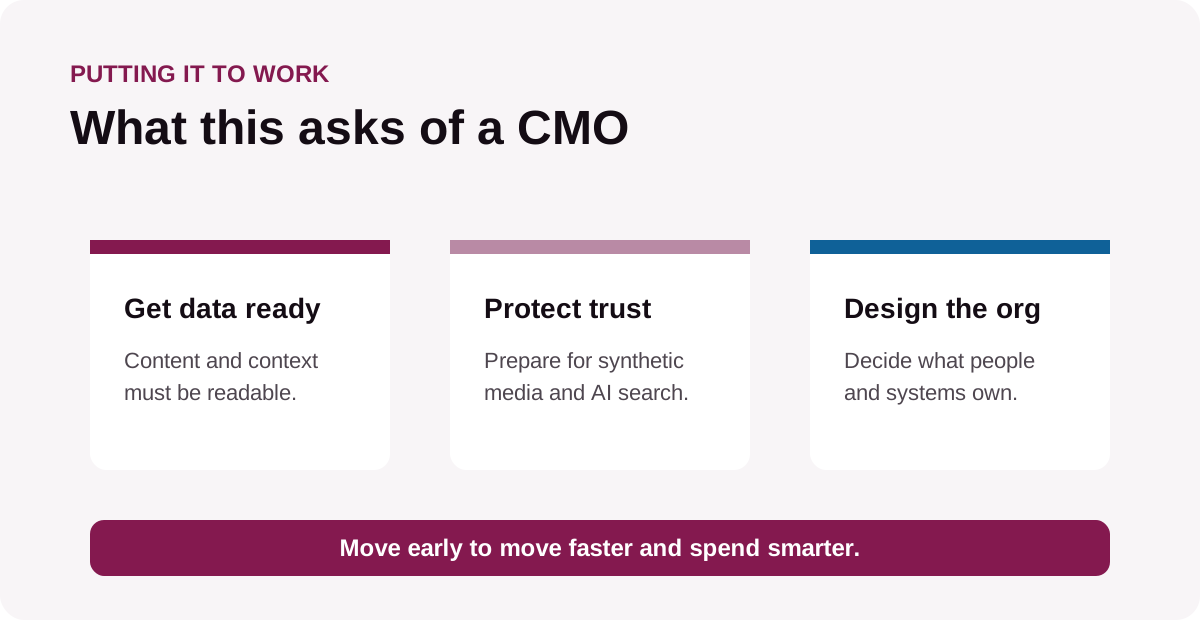
Get the data, content and context ready. AI systems can only act on what they can read. Sorting out how content is structured, described and permissioned is the unglamorous prerequisite.
Protect trust across AI search and social. Plan for misinformation and synthetic media the way you plan for outages: named owners, monitoring, and a response you have prepared, rehearsed and ready to deploy.
Design the composable organization. Decide which work people keep, which the systems take, and publish an AI policy your teams and partners can read and follow.
The CMOs who modernize data, content and operating models early will move faster and spend smarter than the ones who wait for the tools to settle.
The Ten-Year View: Smarter Systems, Pickier People
Ask where marketing lands in ten years and the honest answer is: more automated in the middle, more human at the edges. Machines will handle more of the doing. Attention, trust and taste will be scarcer and worth more.
People win. Always.
VERZE works on the foundation this depends on: agentic marketing orchestration.